How Failures in Critical Equipment Can Shut Down Your Production.
A single boiler outage can stop an entire food or beverage plant, not just one line. Here's why boiler room alarms carry a different kind of risk, and what actually closes the gap between a 2 a.m. trip and a person who can act on it.
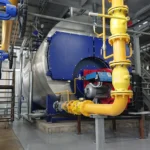
Every food and beverage plant has equipment that can fail without shutting the whole site down. A filler jams, a case packer stalls, a line goes dark, and production reroutes around it, however, the boiler is different. It doesn’t serve one line but the whole plant, and almost nothing else runs without it.
Steam Is a Utility
Cook systems, pasteurizers, CIP circuits, and sanitation all draw on the same steam supply. Nobody schedules around the boiler the way they schedule around a filler, because a boiler isn’t supposed to need scheduling, it’s supposed to just be there.
That’s also why a boiler trip behaves differently than a typical equipment fault. A firetube or watertube unit doesn’t restart in the time it takes to reset a PLC. Purge, warm-up, and pressure build take real time, and a two-hour trip in the middle of the night can easily turn into a lost morning. Anything mid-process when steam drops, a CIP cycle that doesn’t reach temperature, a cook that doesn’t finish, often can’t be salvaged. In food and beverage, that’s scrapped product and a rerun, not just downtime.
A Pressure Vessel With a Fire in It
Boilers also carry a category of alarm that isn’t about production at all. Low water, flame failure, and high pressure exist because the equipment is a pressure vessel with combustion happening inside it, and getting one of those conditions wrong isn’t just about scrap but safety as well.
Standards like ASME CSD-1 in the US require automatically fired boilers to carry alarm systems for exactly these conditions, and that requirement doesn’t disappear just because a plant runs unattended overnight. In fact, one CSD-1 provision makes the opposite point directly: a boiler room with a full-time operator on-site is exempt from certain automatic safety shutdowns, but it is never exempt from the alarm requirement itself. Ontario’s TSSA regulates boiler and pressure vessel safety in a similar spirit; the code doesn’t ask whether someone happened to be watching, it just requires the alarm to exist.
Most plants meet that requirement well. What the code doesn’t specify is what happens between the alarm firing and a person acting on it, and in a boiler room running unattended at 2 a.m., that gap is where the real risk sits.
The Same Trip, Two Different Mornings
The scenario below is an illustrative, anonymized composite based on common boiler-room failure patterns in food and beverage plants. It is not a specific customer account.
Second shift has wrapped. Sanitation is midway through the nightly CIP cycle. The boiler house is empty, as it is most nights, with one firetube unit carrying the entire site.
A feedwater pump loses prime and water levels drop. The low water cutoff does its job and takes the burner offline and so far nothing failed. The safety system worked exactly as designed, however, the panel lights up in an empty room, and the CIP cycle simply stalls without anyone noticing right away. It’s not until the wash water goes lukewarm that sanitation calls a supervisor, who calls maintenance, who has to drive in. By the time the pump is reprimed, and the unit is relit, warm-up and pressure build add another ninety minutes on top of the delay. First shift arrives to a plant that can’t start, and the lines that never reached temperature have to be rerun before anything can ship.
Now run the same trip with the alarm routed directly to a person. The low water cutoff fires, and the alert reaches the on-call millwright’s phone in seconds. He’s asleep and doesn’t respond, so the system automatically escalates to the maintenance lead a few minutes later. She’s on site shortly after, primes the pump, and has the unit relit well before the CIP cycle would have needed to restart. Sanitation finishes on schedule. First shift starts on time, and almost nobody upstairs ever hears about it.
Same failure and the same equipment but the only variable is whether the alarm found a person before the CIP cycle ran out of time.
Why Boiler Rooms Are Worth a Second Look
Food and beverage plants already put real effort into protecting product against equipment failure. The same logic that governs refrigeration and cold chain alarms, catching a problem before it becomes lost or scrapped product, applies just as directly to the boiler room. SeQent’s food and beverage alarm notification solutions are built around that exact principle: route the right alarm to the right person on the device they actually carry, with escalation built in if the first person doesn’t respond.
A boiler room is usually a straightforward place to start. The safety alarms already exist, the code already requires them, and most plants have never actually tested what happens if the on-call phone doesn’t answer at 2 a.m. That’s a fixable gap, and it’s worth knowing whether it exists before a trip finds it for you.
See where that gap might be in your own plant. Score your alarm system in two minutes at seqent.com/alarm-scorecard. No sales call required.