
Intelligent Alert Routing & Escalation
Rules-based alarm routing and automatic escalation that turn every alarm into a managed response. SeQent's critical event management platform gets alerts to the right people by role, severity, and shift, and escalates until someone acts.

Notify the Right Person Automatically
SeQent's alarm escalation software ensures the right person is notified at the right time with automated escalation that reduces delays and missed alerts - replacing manual phone trees with intelligent, configurable workflows.

Rules-Based Routing

Multi-Level Escalation

On-Call Logic & Scheduling
How Does SeQent Route and Escalate Alarms?
From the moment an alarm is triggered, SeQent evaluates configurable rules to determine who should be notified, how, and what happens if they don't respond.
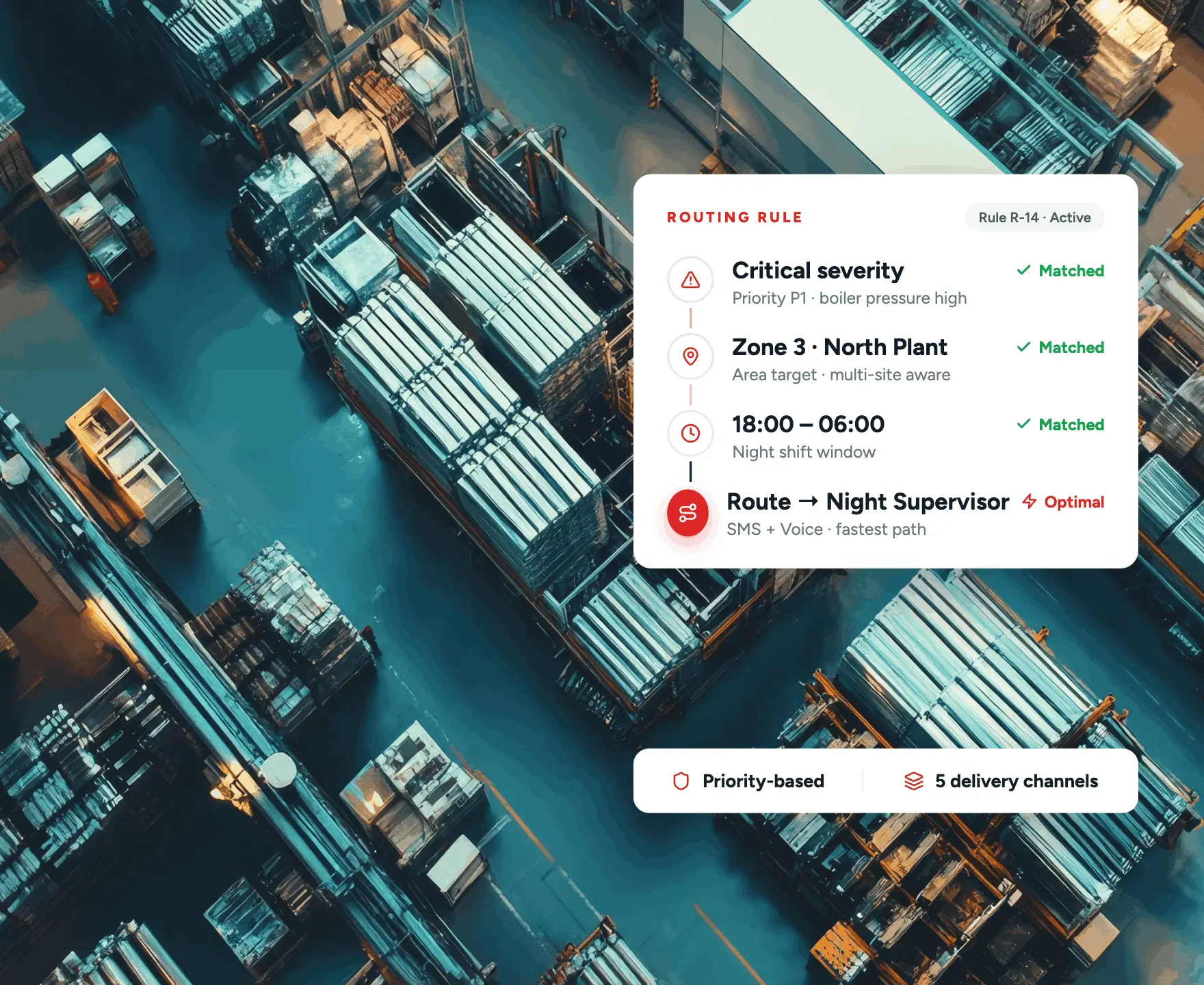
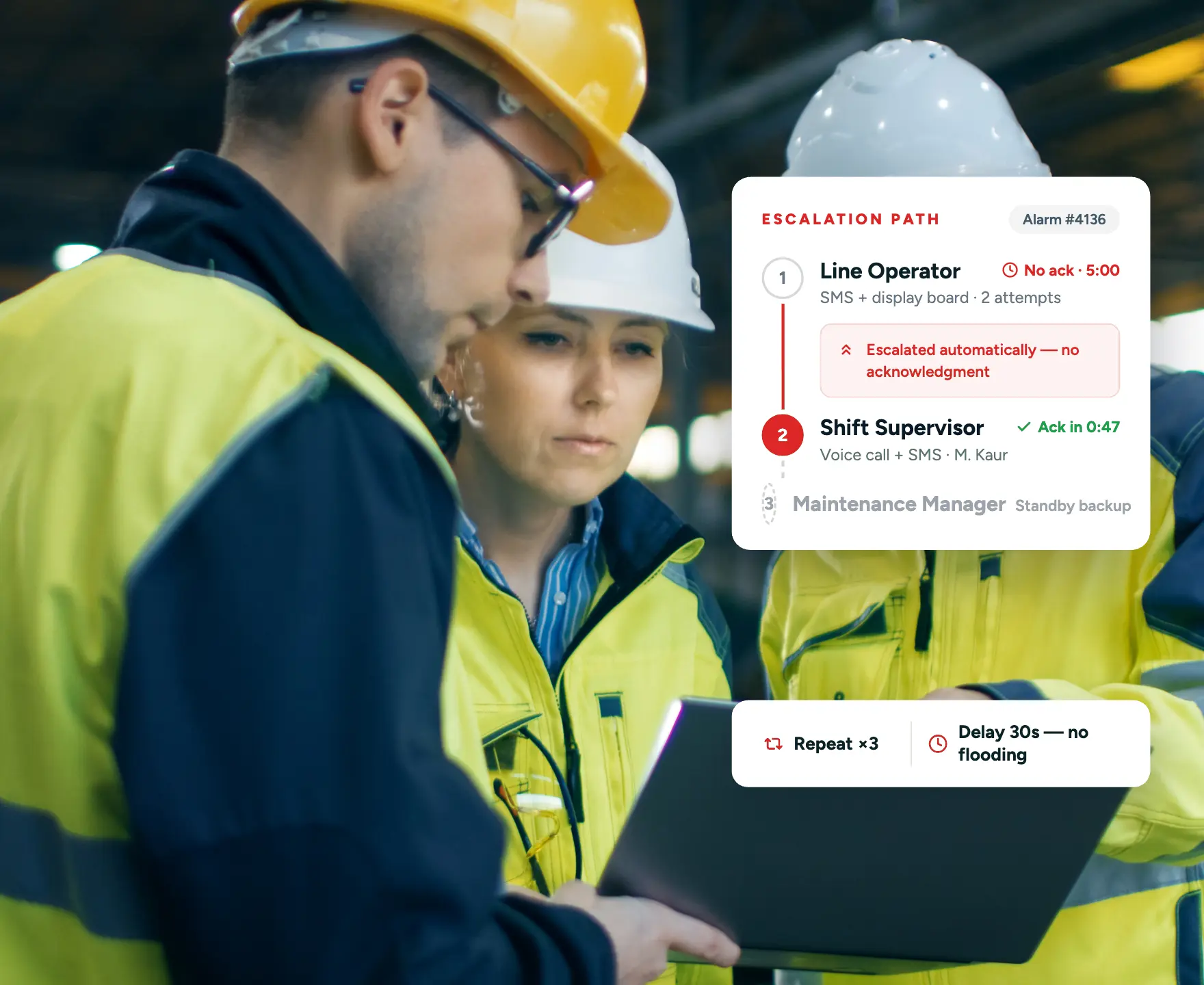
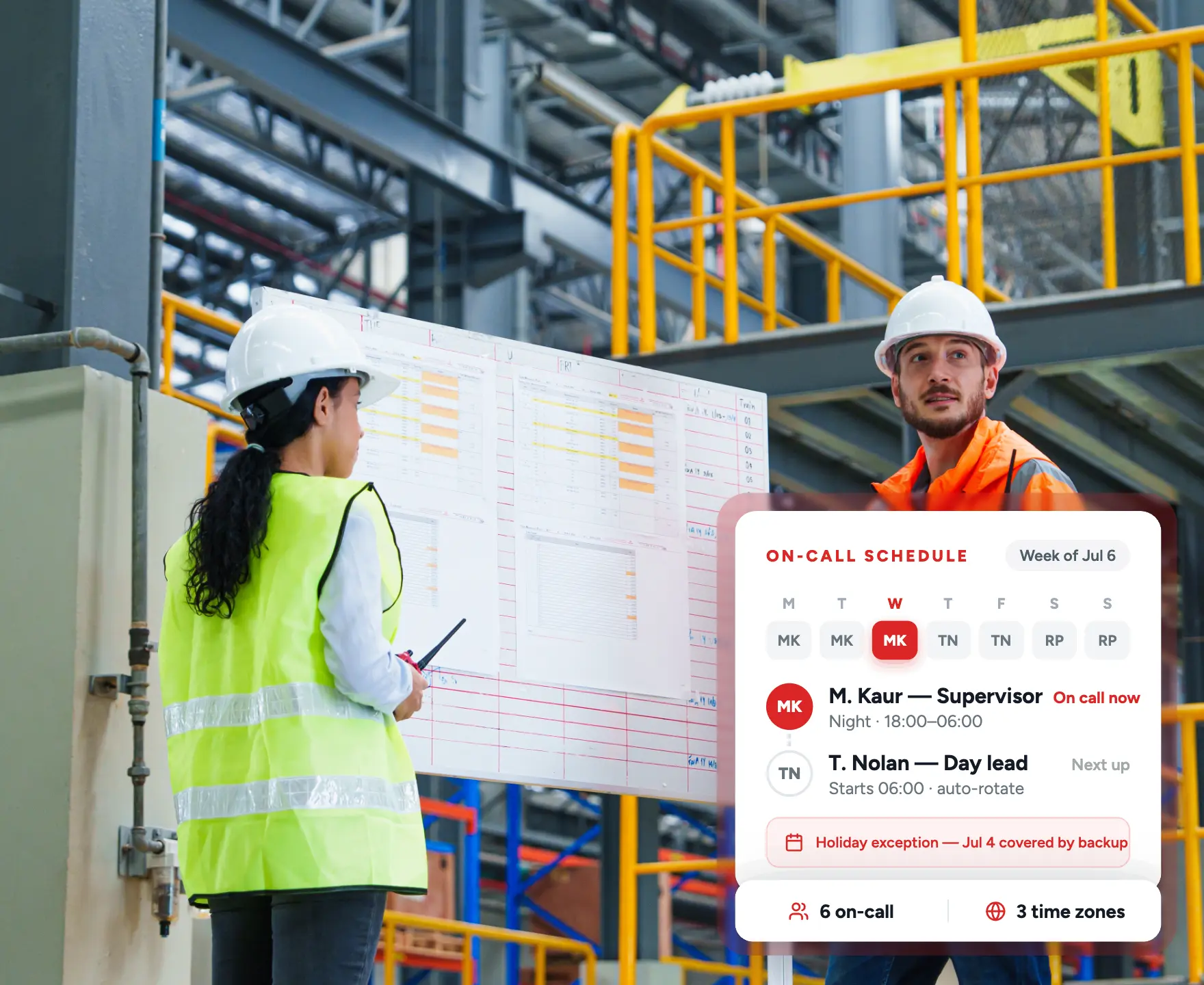
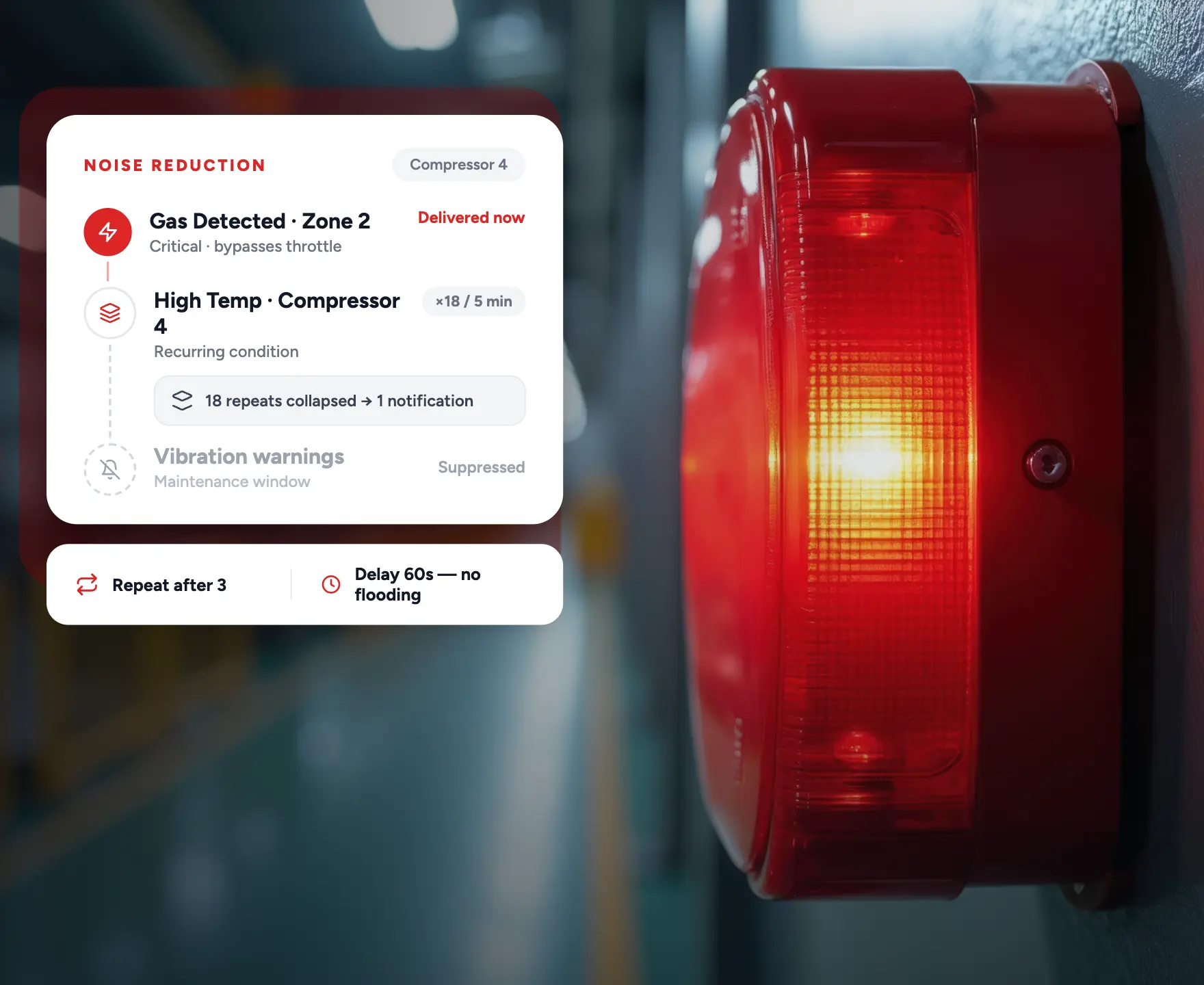
SeQent’s alarm routing software evaluates each alarm against configurable rules based on severity, source system, area, time of day, and shift schedule to determine the optimal delivery path, recipient, and channel.
- Priority-based routing with severity classification
- Source-system-aware rules for different alarm types
- Area and zone-based targeting for multi-site operations
- Time-of-day and shift-aware logic for 24/7 facilities
- Multi-channel delivery per routing rule
What Is Critical Event Management Software?
Critical event management (CEM) software is the layer that sits on top of SCADA, MES, and PLC monitoring and manages what happens after an alarm fires. Monitoring detects the event. Critical event management makes sure a person acts on it, records when they acted, and escalates when they did not.
SeQent covers that full workflow on one platform. Alarm & Event Ingestion brings in alarms from every system, Escalation & Routing decides who is notified and what happens if they don’t respond, Multi-Channel Notification reaches them on radios, phones, PA, and andon displays, and Alarm Management keeps a complete audit trail from signal to resolution.
For a primer on the category, read What Is Critical Event Management in Manufacturing?
What Problems Does Critical Event Management Solve?
Slow Escalation & Resolution
Replace manual phone trees with automated, configurable escalation that routes in seconds, not minutes
Alerts Reaching the Wrong People
Schedule-aware and role-based routing ensures only qualified, available responders are notified
Excessive After-Hours Call-Ins
Intelligent routing targets the right on-call personnel, reducing unnecessary call-ins and team burnout
Alarm Fatigue & Noise
Throttling and priority management prevent notification flooding while ensuring critical alarms always get through
Manual Coordination
Replace manual coordination with automated response workflows that align teams across shifts and sites
Inconsistent Cross-Site Response
Standardize escalation procedures and routing logic across all facilities for consistent response quality
Common Questions About Escalation & Critical Event Management
Critical event management (CEM) software manages what happens after an alarm fires. It ingests alarms and events from SCADA, MES, PLC, and OPC sources, routes each one to the right person by role, area, shift, and severity, escalates automatically when nobody acknowledges, delivers on the devices people carry, and records every step from alarm to resolution.
Alarm notification sends a message. Critical event management manages a response. Notification tells someone that something happened; critical event management confirms that someone acknowledged it, escalates if they did not, and leaves a record that can be reviewed and improved.
SeQent escalates it automatically. Each escalation tier has a configurable timeout, and if the alarm is not acknowledged in time it moves to the next responder or group, up the chain until someone acts. Repeat counts and delays are configurable, and every step is logged.
Yes. Routing is schedule-aware, so alarms go to whoever is on shift or on call at that moment, based on shift assignments, rotations, and team availability. After-hours alarms reach available staff instead of voicemail, and distribution lists group responders by role, area, or site.
Throttling controls how often notifications repeat for recurring conditions, and priority management makes sure critical alarms always cut through. Routing by severity and role also means people only receive the alarms they can act on.


